Community banks and credit unions already have access to valuable data across customer relationships, transactions, and accounts. The challenge is turning that information into something leaders can trust and use.
A strong data strategy starts with clean, reliable data, clear business objectives, and shared accountability. From there, you can use data to improve decision-making and strengthen customer relationships.
Key Takeaways
- Clean data is the foundation for reliable insights and strategic innovation.
- Clear business objectives are essential for a successful data strategy
- Data-driven cultures require organization-wide accountability for data quality and decision-making.
- Better data leads to better customer experience and stronger relationships.
Data has become one of the most valuable assets a financial institution can leverage. However, turning that data into meaningful action challenges many institutions.
To better understand where institutions stand, Cornerstone Advisors surveyed senior executives from 128 financial institutions about their data management practices and capabilities. They found a significant gap: while respondents overwhelmingly recognized the value of data, many have yet to fully capitalize on it.
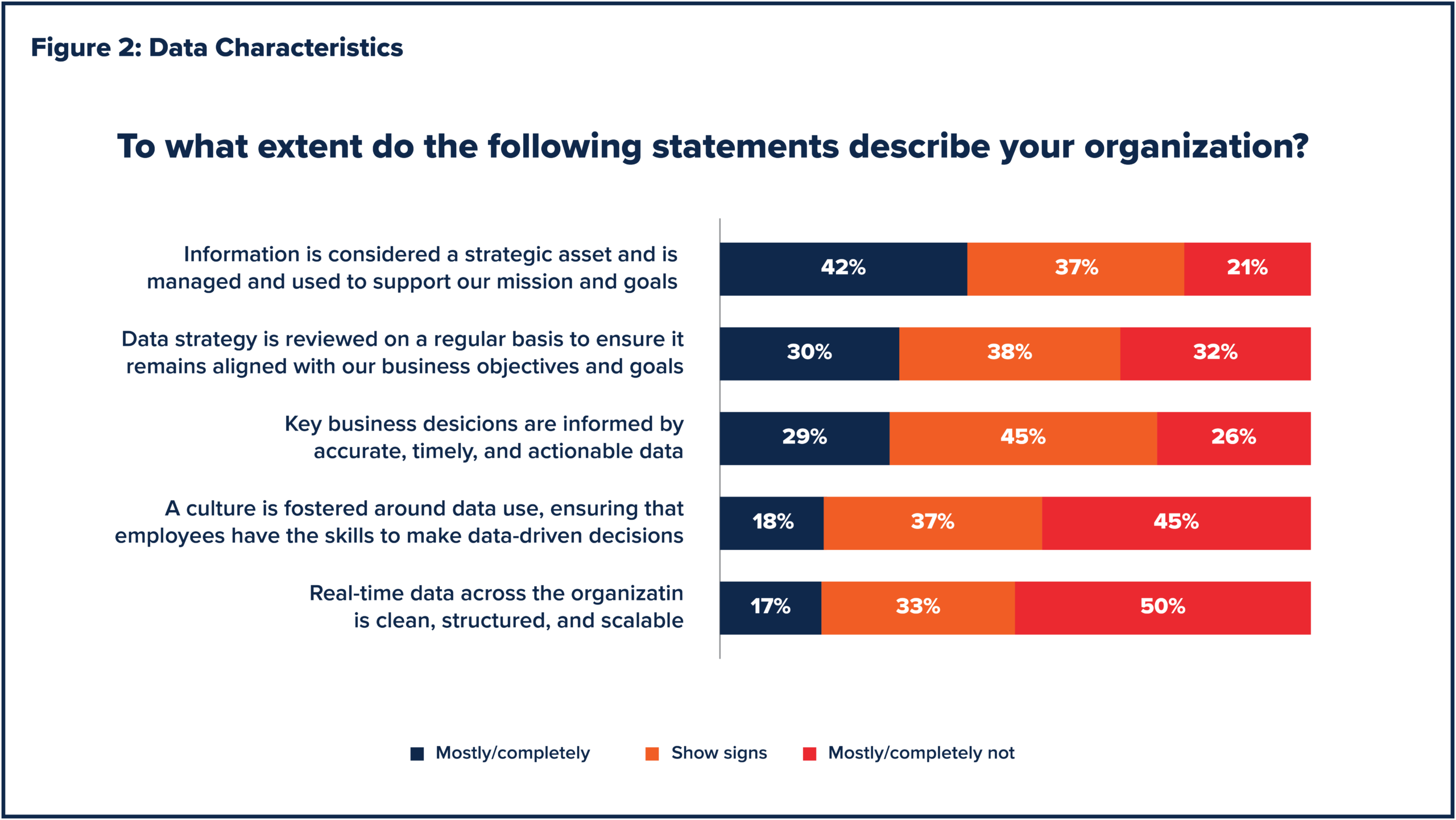
In fact, when asked whether their real-time data was clean and structured well enough to generate meaningful takeaways, nearly half of respondents said no.
That’s a problem. Without reliable, actionable data in real time, making informed decisions is far more difficult.
This research highlights an important reality: unlocking the full value of data starts with a clear strategy and the right framework to turn information into action.
Why Many Banks and Credit Unions Miss the Data Opportunity
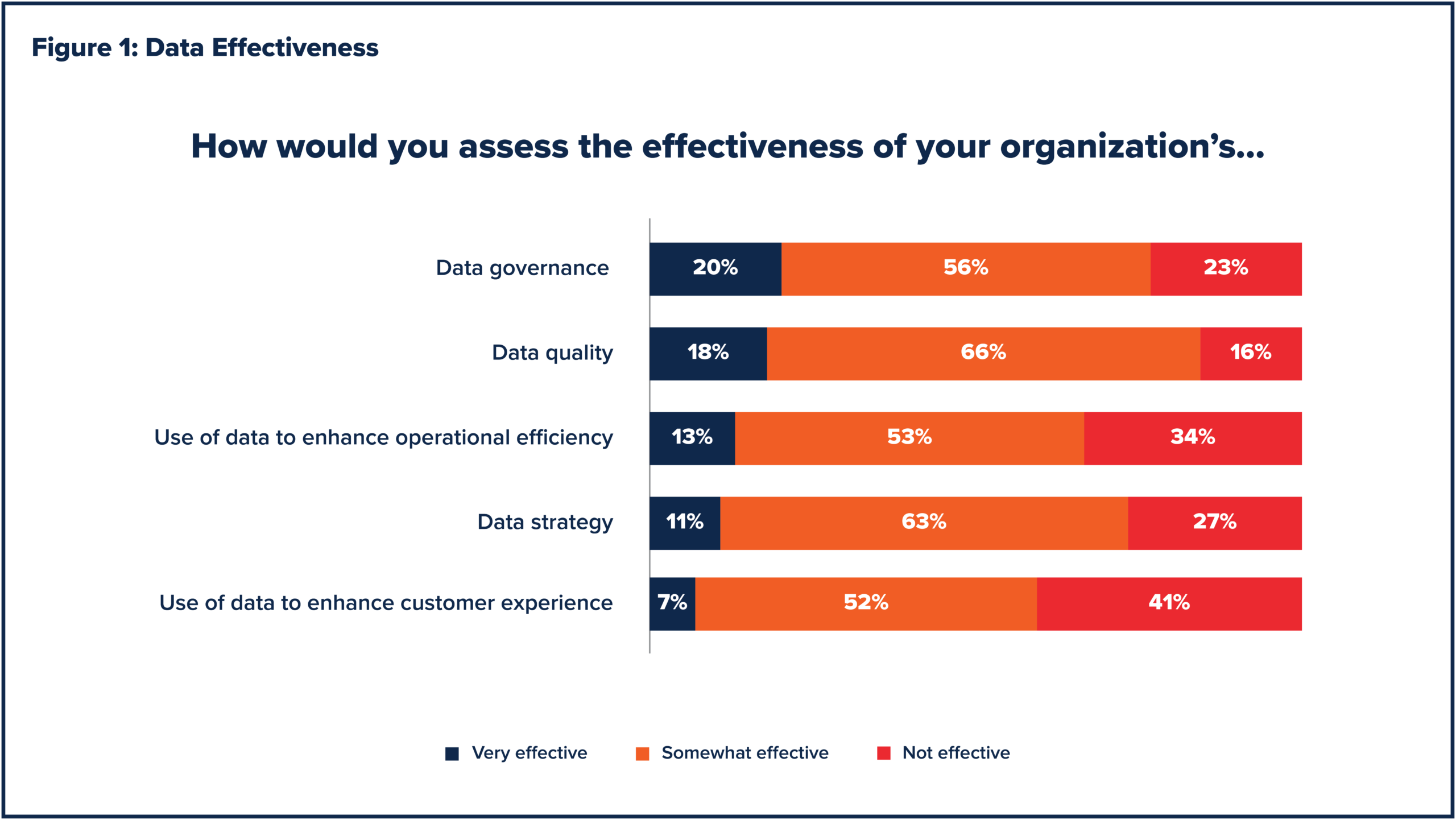
Even when institutions understand the value of data, many still struggle to use it for measurable results. According to the survey, more than a third of institutions say they do not use data effectively to improve customer experience or operations. And another third of respondents said they didn’t have an effective data strategy in place.
In many cases, the challenge isn’t a lack of data. It’s overcoming the operational and technological barriers that prevent institutions from putting that data to work.
Begin Your Data Journey with a Plan Instead of a Platform
When institutions begin exploring ways to better apply their data, it can be tempting to jump straight into dashboards and reporting tools. However, before building reports or visualizations, the business problems being addressed must first be clearly defined. Asking the right questions is often the best place to start:
- Do we want to increase deposits from current customers?
- Should we reduce loan defaults or credit risk?
- How can we personalize digital banking experiences?
Without a clear objective, any data initiative could become costly and ineffective.
The good news is that most banks and credit unions already have access to:
- Customer demographics
- Transaction histories
- Account behavior data
- Operational and risk metrics
This data can reveal patterns that may otherwise go unnoticed, such as changes in account activity, shifts in customer engagement, opportunities to deepen relationships or early indicators of risk. When connected to a clear business goal, that can translate to a better understanding of what their customers need and how to provide those solutions.
Turning Data Into Action: Where Institutions Should Focus Next
Recognizing the value of data is only the first step. The institutions that gain the greatest advantage from their data are not necessarily the ones with the most information, but the ones with a clear strategy for putting it to work.
To move from collecting data to creating meaningful business value, financial institutions should focus on four key priorities:
Build a Data-Driven Culture
Technology alone cannot create a data-driven organization. Leaders should encourage employees at every level to use data in their daily decision-making and foster a culture where insights are trusted, understood, and acted upon.
Strengthen the Data Foundation
As institutions explore AI and advanced analytics, success will depend on the quality of the underlying data. Clean, consistent and well-governed data creates the foundation needed to generate reliable insight and support future innovation.
Make Data Quality Everyone’s Responsibility
Data integrity is not solely an IT function. From frontline employees to executive leadership, everyone plays a role in ensuring information is accurate, complete, and reliable. Organizations that establish shared accountability for data quality are better positioned to make confident business decisions.
Turn Insights into Action
Data only creates value when it drives meaningful change. Whether improving customer experiences, identifying operational inefficiencies, or uncovering new growth opportunities, institutions should focus on applying insights to real business challenges rather than creating unneeded dashboards.
By focusing on these principles, financial institutions can turn data from an underutilized resource into a strategic asset that informs decision-making, drives growth and helps them better serve their customers.
Begin The Data Strategy That Will Change the Course of Your institution
Data can be one of a financial institution’s most valuable assets, but only when there is a clear strategy behind it. Having piles of information does not automatically lead to better decisions or new growth opportunities, it’s what you decide to do with it and your plan of attack.
Most banks and credit unions already have the data they need to get started. The real opportunity is learning how to use that data with purpose, turning everyday information into insights that help the institution better understand customers and solve business challenges.
Want to get more value from your institution’s data? Download our report to discover how leading financial institutions are improving their Data IQ and turning insights into action.
Download the report
Keith Droll, Product Manager
Keith Droll is a Product Manager at CSI with expertise in software architecture, data-driven decision-making and customer-centric product development. Prior to this role, he built and deployed scalable software solutions for SaaS providers and financial institutions, including USAA, AWS and Amazon. Keith holds a Bachelor of Science in Computer Science from Purdue University and an MBA from the University of Texas at San Antonio.